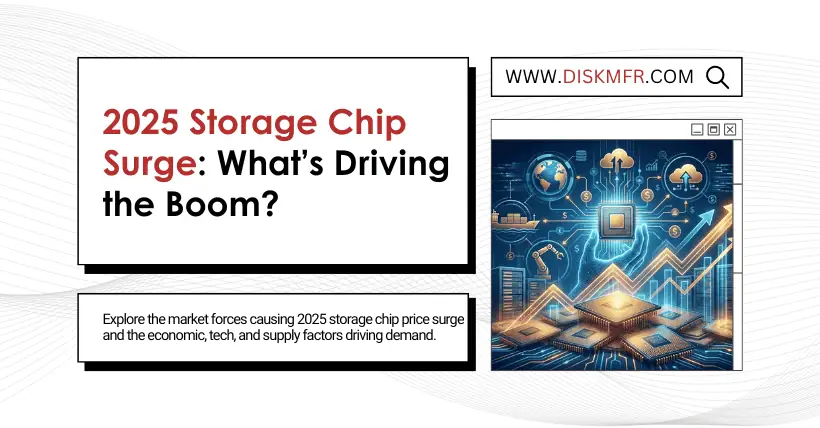
In recent months, prices of DRAM, NAND, and even high-bandwidth memory (HBM) have risen rapidly and sharply, prompting OEMs like Lenovo, Dell, and HP to issue warnings and prepare for price hikes on servers and PCs (some reports point to increases of up to 15–20%). This is not an isolated incident—it is the result of a complex interplay between supply-demand restructuring, industrial strategy shifts, and global capital dynamics.
Massive AI investment is reshaping the “value hierarchy” of memory and storage—manufacturers are prioritizing capacity and resources toward higher-margin, high-demand AI/data center segments, leading to shortages and price surges in consumer and enterprise usage.
01
Explosive AI demand in 2025 for “high-end memory”
Large model training/inference requires massive memory bandwidth and capacity (HBM, high-capacity DDR5, etc.). Cloud providers and AI device manufacturers are placing large-volume orders in a short time, directly occupying wafer and packaging/testing capacity originally intended for consumer and traditional enterprise markets.
To ensure supply for high-profit customers, manufacturers are prioritizing capacity allocation. Companies like Micron, Samsung, and SK Hynix are shifting from “general supply” strategies to “AI/data center-first” policies. This is also the key context behind Micron’s decision to exit certain consumer brands and reallocate resources toward HBM and enterprise products.
02
Supply is already relatively concentrated globally
The DRAM/NAND industry is highly concentrated among a few major players—Samsung, SK Hynix, and Micron. Expanding capacity requires massive investment and long construction cycles, making it impossible to add large-scale capacity quickly in the short term. So when demand spikes suddenly, supply cannot catch up quickly, giving manufacturers pricing power to raise both contract and spot prices.
Reports in recent weeks and months show sharp jumps in both contract and spot prices (with some categories experiencing very steep short-term increases).
03
Chain reactions in the contract and spot markets
When mainstream customers (cloud providers, OEMs) expect prices to keep rising, they sign contracts and stock up in advance; meanwhile, second-tier manufacturers or module makers, seeing spot prices rise, also restock, further amplifying short-term demand and exacerbating shortages. In turn, the rising prices incentivize manufacturers to continue prioritizing deliveries to high-paying customers, creating a positive feedback loop.
04
As a result, market research firms are now lowering
their expectations for 2026 system shipments. Manufacturers shift strategies to focus on high-margin/high-bandwidth products. They find that HBM, advanced DDR, and enterprise SSDs offer better profits and long-term contracts, so they invest in R&D, production lines, and yield improvements in those areas. Support for capacity in consumer-grade, low-end product lines declines, making consumer availability worse and pricing more volatile in the long run. Micron’s termination of the Crucial consumer brand is a clear sign of this strategic reallocation.
The rise in memory prices is not an isolated event—NAND, SSD controllers, and even traditional HDDs are also affected during supply chain restructuring (e.g., packaging/test capacity, critical chemicals, wafer foundry allocation). As a result, the overall BOM (bill of materials) cost for complete systems is rising, forcing manufacturers to consider passing the cost onto end customers.
Multiple recent industry reports show that both DRAM and NAND contract and spot prices have risen significantly. This round of price increases is not a “random price fluctuation” but a reordering of the industry in response to the AI era: resources are concentrating in segments with higher profit margins and technical barriers, while the consumer side passively bears the premium.
In the short term, OEMs and distribution channels will feel the pain. Capital will push upstream players to expand production, but capacity deployment and technology upgrades take time. For Chinese enterprises, it is necessary to manage risk in the short term through contracts and inventory management, while in the mid-to-long term, increasing investment in technology and capacity layout is crucial to reduce vulnerability to external dependencies on key components.

Disclaimer:
- This channel does not make any representations or warranties regarding the availability, accuracy, timeliness, effectiveness, or completeness of any information posted. It hereby disclaims any liability or consequences arising from the use of the information.
- This channel is non-commercial and non-profit. The re-posted content does not signify endorsement of its views or responsibility for its authenticity. It does not intend to constitute any other guidance. This channel is not liable for any inaccuracies or errors in the re-posted or published information, directly or indirectly.
- Some data, materials, text, images, etc., used in this channel are sourced from the internet, and all reposts are duly credited to their sources. If you discover any work that infringes on your intellectual property rights or personal legal interests, please contact us, and we will promptly modify or remove it.