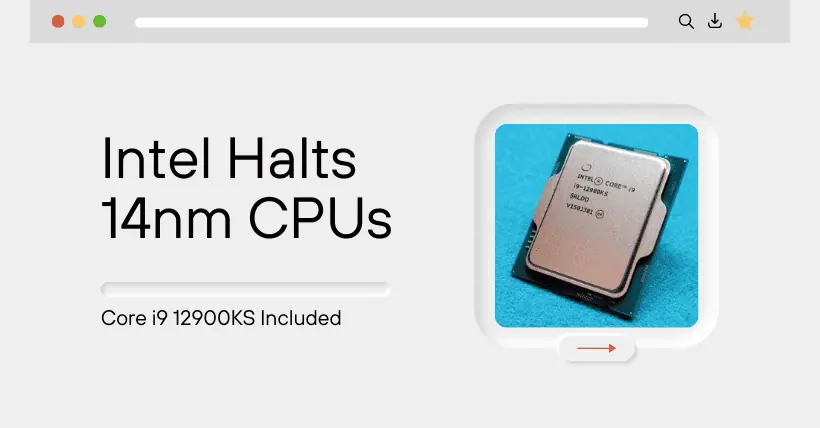
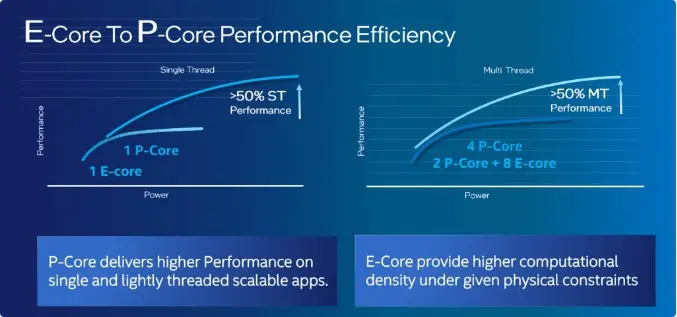
In October 2021, Intel officially released the 12th generation Core processors, which featured significant changes with a hybrid architecture design. This includes high-performance P-Cores (performance cores) and high-efficiency E-Cores (efficiency cores), and they are the first desktop processors manufactured using the Intel 7 (10nm) process.
The hybrid architecture was adopted with the intention of efficiently managing the processor’s computing power to reduce overall power consumption. However, achieving this is not easy; it requires optimization of the processor itself, support from the operating system (recommended to use Windows 11), and optimization support from third-party applications.
In summary, the 12th generation Core processors faced many obstacles after their release, and their actual performance was significantly below expectations. In the tech community, they received mixed reviews, with many people still skeptical about the hybrid architecture.
As the saying goes, “Times change,” and in the past six months, the 13th and 14th generation Core processors have experienced instability issues, with significant failures. Additionally, the 12th generation Core processors have been on the market for three years, with continuous price drops, making them more cost-effective.
Moreover, their actual performance is not bad. If you are building a system now, choosing a mid-to-high-end model from the 12th generation Core series (such as the Core i7-12700) offers performance that is not inferior to the mid-to-low-end models of the 13th and 14th generation Core processors.
In summary, the situation has dramatically reversed, and the 12th generation Core processors now offer greater overall advantages, higher cost-effectiveness, and are more worth purchasing, which is an unexpected turn of events for many.
However, here is a “bad” news to share: for those interested in the Core i9-12900KS, note that this processor is likely to increase in price because Intel is about to discontinue it.
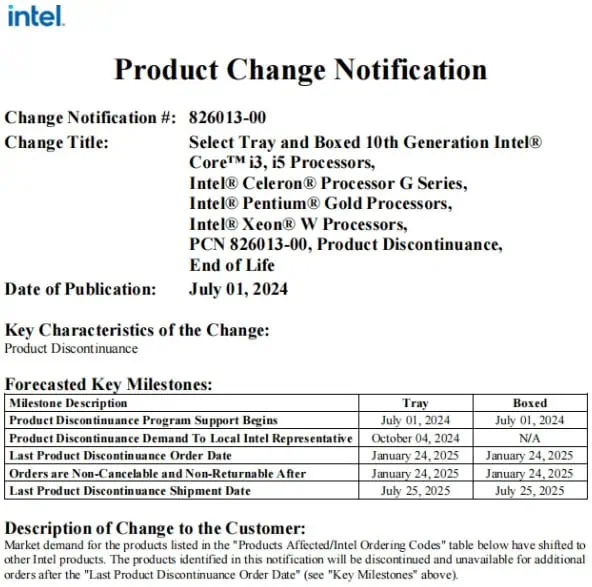
On July 1, Intel announced (as shown in the image) that they would discontinue several processors, mainly including the entire series of 10th generation Core desktop processors (codenamed Comet Lake and using the 14nm process) and entry-level workstation processors Xeon W-1250, among about 30 models (see the image for details).
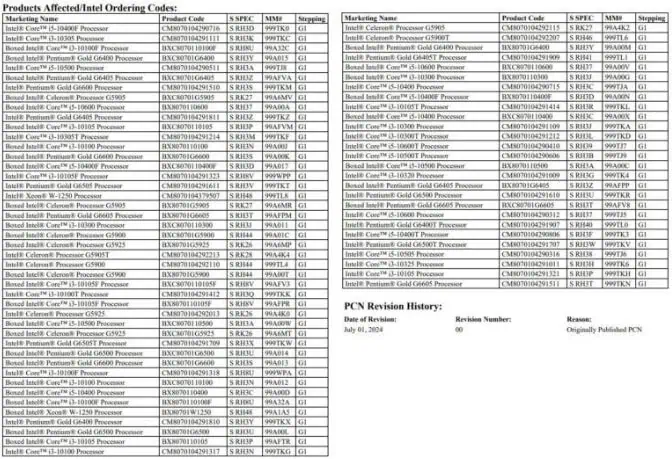
To be fair, Intel’s discontinuation of the 10th generation Core processors has little impact on ordinary consumers, as no one would choose a processor older than the 12th generation for a new build. The only possible impact is on the Core i9-12900KS, even though it does not use the 14nm process.
The Core i9-12900KS, released on April 5, 2020, uses the 10nm process, with 8 large cores and 8 small cores, totaling 16 cores and 24 threads, a 14MB L2 cache, and a 30MB smart cache.
The standard operating frequency is 3.4 GHz, with a maximum operating frequency of 5.5 GHz, integrated UHD 770 graphics, and a standard power consumption of 150W. The official suggested retail price is $739, while the current market price is around 3000 RMB.
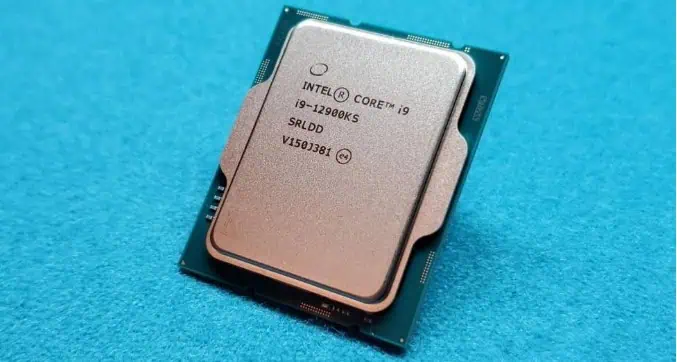
The performance of the Core i9-12900KS is slightly higher than the Core i7-13700K (8% higher in single-core performance, comparable in multi-core performance), with a market price about 200 RMB higher. Its price is similar to the Ryzen 9 7900, but its performance is about 7% lower.
However, the advantage of the Core i9-12900KS is that it runs more stably and is easier to use compared to the Core i7-13700K. Compared to the Ryzen 9 7900, the motherboard costs less, and it can still use DDR4 memory, making the overall system build cost lower, thus providing greater overall advantages.
The Core i9-12900KS is still available in the market and is expected to be discontinued in January 2025, with sales ending in July 2025. Those in need can consider this processor.

Disclaimer: This article is created by the original author. The content of the article represents their personal opinions. Our reposting is for sharing and discussion purposes only and does not imply our endorsement or agreement. If you have any objections, please get in touch with us through the provided channels.