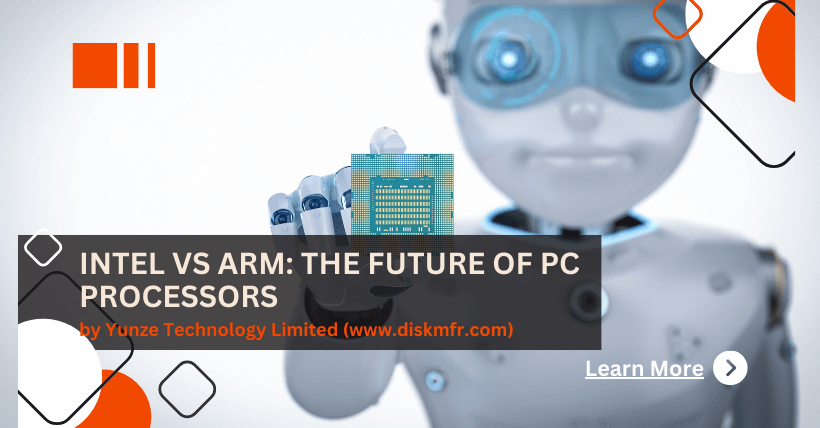
In the early morning of October 27, Intel announced its third-quarter financial report for 2023. After more than a year of destocking, Intel’s PC business has finally returned to the right track, far exceeding expectations in terms of revenue, profitability, and other key data. It can be seen that as the demand for PC chips in the market is improving, the long-awaited industry recovery is underway.
01
The New Challenger: Qualcomm’s Snapdragon X Elite
However, at this crucial juncture, Intel faces a challenge in the PC chip market. First, Qualcomm released the Snapdragon X Elite, designed for laptops. This chip is based on the Arm architecture and supports the Windows operating system. Qualcomm CEO Amon stated that the performance of this chip is nearly twice that of Intel’s i7-13800H. He also mentioned that future laptop processors will gradually transition to the Arm architecture.
02
A Growing Trend: Arm-Based PC CPUs
On the day of the new chip release, GPU giant NVIDIA and Intel’s old rival AMD were both reported to be developing PC CPUs based on the Arm architecture, also supporting the Windows operating system. Many manufacturers are laying out Arm PC CPUs, and a fierce battle is underway.
03
x86 vs Arm: The Battle of Architectures
In today’s chip market, the x86 and Arm architectures stand on their own. The former, relying on the Wintel alliance, has dominated the PC industry chain and reigned in the general processor market for many years, while the latter has rapidly risen to become the most mainstream processor architecture in the mobile internet wave.
It seems that these two architectures are developing in their respective areas of expertise, but in fact, they have long been “testing” each other. For example, Intel’s mobile Atom based on the x86 architecture, and Qualcomm’s Snapdragon 8cx platform based on the Arm architecture, both products were once highly anticipated but failed to make a significant impact.
04
The Evolving Arm Architecture
To simplify, the x86 architecture is representative of complex instruction sets, with longer single instructions and more meaning, making it more suitable for complex hardware environments. The Arm architecture, on the other hand, is representative of reduced instruction sets, with shorter single instructions and simpler hardware requirements. With a more streamlined architectural design, the Arm architecture, compared to the x86 architecture, has lower power consumption, more obvious energy efficiency, and higher integration, making it very suitable for mobile devices that require low power consumption.
However, on desktop-level devices, the performance of the Arm architecture is quite weak, and the Snapdragon 8cx processor is not even as good as the A12 chip at the time, let alone posing a threat to Intel, AMD, and other x86 processors. However recent improvements in Arm architecture have increased its high-performance computing capabilities.
05
The Rise of Arm CPUs: A Business Model Shift
Why are there so many chip manufacturers today wanting to make Arm PC CPUs? Mainly because of some changes in the current chip market. From Intel’s financial report, we can see that the PC market is picking up its growth curve.
According to Counterpoint Research, in the third quarter of this year, global PC shipments have continued to increase for the second consecutive quarter. After a long period of destocking, global OEM manufacturers have been working hard to solve the inventory problem, and they have been looking for new growth engines. In this context, “AI PC” has become a hot topic.
06
The Promise of Arm in the Era of Edge AI
The so-called AI PC, in more familiar terms, is “edge AI.” Throughout this year, smartphone manufacturers have been emphasizing this new concept, and PC manufacturers naturally don’t want to miss out on the charm of AI.
To create an AI PC, a processor with AI capabilities is required. It not only needs to be powerful but also needs to ensure low power consumption during operation. In this regard, the advantages of the Arm architecture become evident. Apart from Intel and AMD, most manufacturers do not have a license for the x86 architecture. Among the other niche architectures, Arm is the only option.
To seize a share of the pie in the era of edge AI, chip manufacturers have quietly started developing Arm PC CPUs. Whether they will succeed or not, the product layout needs to be in place.
07
The Role of Microsoft in the Arm PC Ecosystem
Not only in the case of AI PCs, but Microsoft is also accelerating the pace of updating the Windows operating system, aiming to stimulate a rebound in global PC shipments. As a major winner in the AI era, Microsoft hopes to create a new AI operating system that will disrupt the PC.
With the concept of “AI PC,” it has almost been implied that consumers must upgrade to processors that support AI features in the future. Completing the ecosystem is a must, but there are thresholds to overcome.
08
The Microsoft-Intel Dynamics
From a business model perspective, the arrival of the AI era has accelerated the determination of manufacturers like Qualcomm to enter the PC market. However, having the hardware alone is not enough; the software ecosystem also needs to be established. It’s not just about having tools at the development level; application support also requires support from the operating system.
In fact, there have been signs of a rift between Microsoft and Intel in the Wintel alliance. In the game of cooperation and conflict, Microsoft has been trying to enter the Arm system.
09
The Challenges of Compatibility
This time, Windows allows Arm devices to run unmodified x86 applications through emulation and provides a range of tools for Arm developers on its official website to support application development on Arm devices. However, the PC ecosystem is more complex than mobile devices, with a vast number of daily applications and various professional software. The difficulty is evident.
As for whether future new systems like Windows 12 will support Arm devices, the author believes that unless the Wintel alliance completely breaks down, Microsoft will prioritize support for x86 architecture processors. At the same time, Intel will not give up on developing edge AI chips.
Compared to this, the Windows on Arm ecosystem looks promising, but it is still a “big pie,” and the work of compatibility cannot be completed solely by the open-source community and third-party developers.
10
Contract Manufacturing: The Key to Success
During the conference call after the financial report was released, Intel CEO Pat Gelsinger responded by saying that Arm CPUs are not a threat and that personal computers based on the Arm architecture are not important in the overall context. Furthermore, Pat Gelsinger added that these chips present a significant opportunity for semiconductor foundries.
The Snapdragon X Elite uses the same 4nm manufacturing process as the Snapdragon 8 Gen3 and is likely to be produced by TSMC (Taiwan Semiconductor Manufacturing Company). However, given the extreme shortage of AI chips, TSMC’s capacity is already fully utilized, considering smartphone chips, automotive chips, and other high-compute chips. Therefore, the available production capacity for the Snapdragon X Elite is limited.
In addition, when companies like NVIDIA, AMD, and others introduce Arm-based PC CPUs, they are also likely to start with the 4nm process. Depending on a single foundry is evidently not feasible.
11
Intel’s Strategic Move
Apart from TSMC, the only chip manufacturer currently capable of producing 4nm chips is Samsung, but their yield rate is not high. Intel, on the other hand, is keen to secure contracts for Arm PC CPU manufacturing.
It’s worth noting that this fiscal quarter, contract manufacturing was the only business that saw significant growth for Intel, and they plan to increase their investment in this area. If they can secure large orders from domestic companies, it would be a “politically correct” move to reduce their dependence on TSMC.
12
The Future of Arm in PCs
There are still two years until 2025, and the widespread availability of the Snapdragon X Elite also requires the support of PC OEM manufacturers. Intel has ample time to respond to the challenges posed by Arm PC CPUs.
In conclusion, the introduction of Arm-based processors into the PC market presents a significant shift in the industry landscape. As demand for more powerful and energy-efficient processors grows, Arm architecture has become a viable option. The competition between x86 and Arm is heating up, and manufacturers are eyeing the potential of Arm-based CPUs in the era of edge AI.
The success of Arm in PCs will depend not only on the capabilities of the chips themselves but also on the support of the software ecosystem, particularly from major players like Microsoft. The dynamics between Intel and Arm-based processors will continue to evolve, and contract manufacturing will play a crucial role in determining the future of this technology.
As the industry moves forward, the battle between these architectures will shape the next generation of personal computing, and consumers can expect more powerful, efficient, and AI-capable PCs on the horizon.
13
FAQs
- What is the key difference between x86 and Arm architectures in PCs? The key difference lies in the instruction sets and complexity of the architectures. x86 is known for its complex instruction sets, while Arm features reduced instruction sets, making it more suitable for low-power and mobile devices.
- Why are chip manufacturers showing interest in Arm-based PC CPUs? The rise of edge AI and the need for AI-capable processors in PCs have driven chip manufacturers to explore Arm architecture due to its power efficiency and suitability for these tasks.
- How does Microsoft fit into the Arm-based PC ecosystem? Microsoft is working on supporting Arm devices in its Windows operating system. While compatibility challenges exist, Microsoft’s involvement indicates a potential shift in the industry.
- What is the role of contract manufacturing in the Arm-based PC market? Contract manufacturing is crucial for producing Arm-based PC CPUs. Intel and other chip manufacturers are seeking to secure contracts to meet the growing demand.
- What can consumers expect from the competition between x86 and Arm in PCs? Consumers can anticipate more powerful, energy-efficient, and AI-capable PCs as the competition between x86 and Arm architectures drives innovation in the industry.

Recommended Reading:
- Why AMD Ryzen CPUs Run Hot: Unpacking the Heat Issues
- Intel Enters ARM Chip Arena, Aims to Outdo TSMC
- Microsoft Vision: ARM-Based Windows as Future Tech!
- Google Unveils Axion: Revolutionary Arm CPU for Data Centers
- Is Intel the Next Nokia in Tech? Exploring the Similarities
- Qualcomm Faces IP Setback as ARM Withdraws License
- Qualcomm vs Arm: Legal Battle Unfolds in Nevada Court