Greetings, enthusiasts of the digital forge! It’s widely acknowledged amongst us that ASUS and Gigabyte stand as titans in the realm of motherboard and expansion card fabrication, harboring a fervent zeal for the arena of extreme computational trials—overclocking, to be precise. Their names, emblazoned upon the leaderboards of overclocking sanctuaries like CPU-Z, stir excitement in our hearts, do they not?
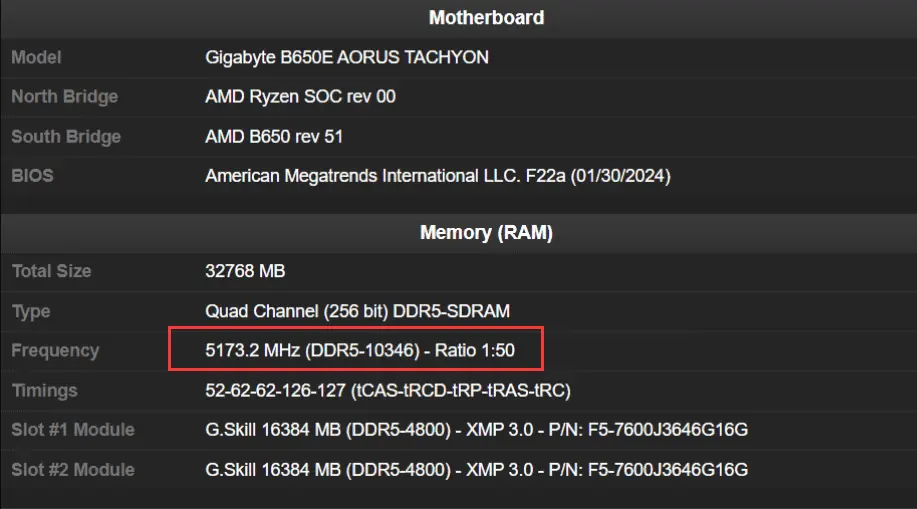
In our discourse today, we spotlight a recent prodigious endeavor by Gigabyte, who ventured into the domain of memory overclocking and emerged victorious, setting a novel zenith for memory operational frequency by elevating DDR5 memory to an astonishing 10346MHz.
Allow me to delineate the arsenal employed in this quest:
- The processor: the freshly released AMD’s Ryzen 7 8700G APU.
- The motherboard: the powerful Gigabyte B650E AORUS Tachyon.
- And of course, the key player: the G.SKILL Trident Z5 RGB DDR5 7600 CL36 memory.

This record-setting feat was not the fruit of a singular attempt but the culmination of relentless pursuit. Initially, the memory’s operational frequency soared past 9000MHz, subsequently breaching 10002MHz, and ultimately achieving 10346MHz—a testament to unwavering determination.
In the realm of memory parameter adjustments, the timing of the G.SKILL Trident Z5 RGB DDR5 7600 CL36 was set to an intricate “52-62-62-126-127”, under a standard voltage of 1.45V, with the entirety of the overclocking odyssey undertaken under the aegis of air cooling.

This overclocking trial bears significance for a duo of reasons.
Primarily, with the impending advent of Intel and AMD’s next-generation processors in the latter half of this annum, which will exclusively embrace DDR5 memory, it becomes paramount for us, especially those contemplating system enhancements, to stay abreast of advancements in DDR5 memory technology.
Originating at 4800MHz, DDR5 memory frequencies have swiftly ascended, with the vanguard now surpassing 6000MHz. Frequencies below this threshold are rendered obsolete. Moreover, DDR5 memories boasting frequencies over 7000MHz exist, albeit commanding a premium.
Intriguingly, the potential for further elevation in DDR5 memory frequencies looms large, as certain motherboard manufacturers have unfurled firmware updates facilitating upwards of 64GB of memory per slot. This heralds a promising horizon for DDR5 memory in terms of both operational frequency and capacity.
The secondary focal point revolves around the AMD Ryzen 8700G processor and the 600 series motherboard. AMD’s assurance that its 600 series motherboards will extend support to forthcoming processors was scrutinized through this overclocking trial, affirming AMD’s commitment to embracing high-frequency memory capabilities.
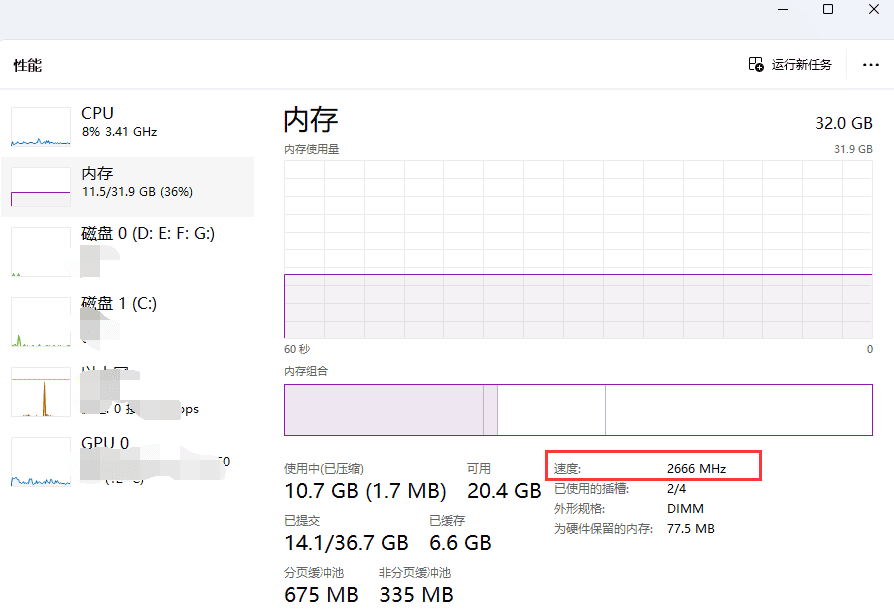
In summation, clinging to DDR4 memory appears increasingly unjustifiable. My DDR4 memory, despite claims of reaching 3000MHz, operates at a mere 2133MHz under conventional conditions. Activation of XMP yields stability only at 2666MHz; any venture to 2999MHz precipitates crashes and blue screens.
Contrastingly, mainstream DDR5 memory effortlessly attains frequencies exceeding 6000MHz, proffering a performance manifold greater. Thus, for those considering an upgrade, prudence might dictate awaiting the year’s end to transition to a DDR5 memory-equipped platform, thereby securing a substantial leap in performance. Does this strategy not resonate with wisdom?
Related:
- DDR5 RAM Sale: Massive Price Drop & Performance Gain!
- The Best Answer to Why Analog Circuits Are Difficult

Disclaimer:
- This channel does not make any representations or warranties regarding the availability, accuracy, timeliness, effectiveness, or completeness of any information posted. It hereby disclaims any liability or consequences arising from the use of the information.
- This channel is non-commercial and non-profit. The re-posted content does not signify endorsement of its views or responsibility for its authenticity. It does not intend to constitute any other guidance. This channel is not liable for any inaccuracies or errors in the re-posted or published information, directly or indirectly.
- Some data, materials, text, images, etc., used in this channel are sourced from the internet, and all reposts are duly credited to their sources. If you discover any work that infringes on your intellectual property rights or personal legal interests, please contact us, and we will promptly modify or remove it.